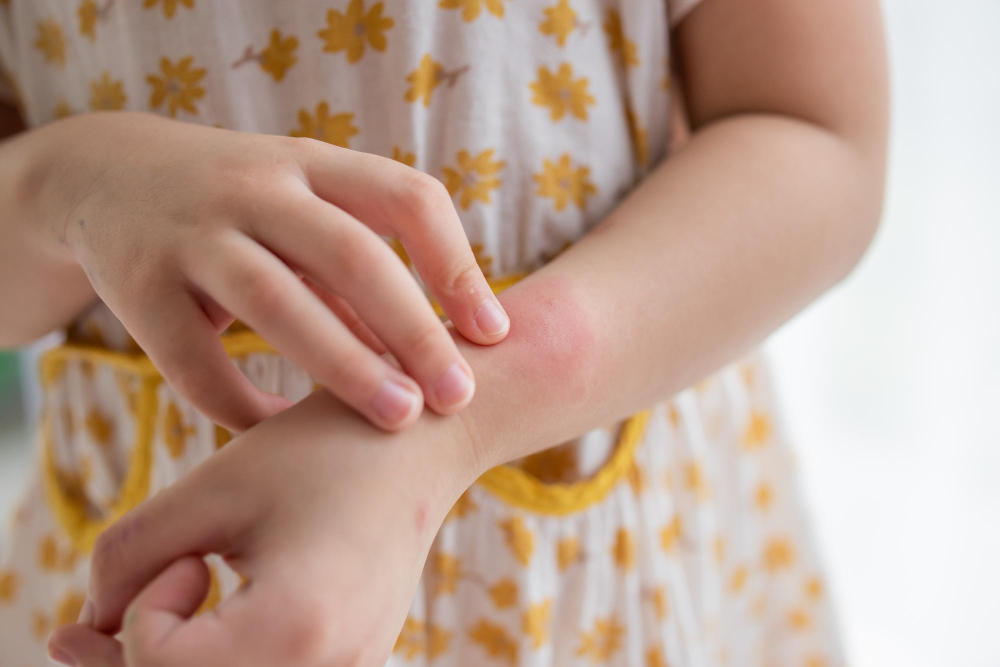
Monsoon skin allergies in children are common during the rainy season. Many parents notice skin rashes or itching in their kids as the weather changes. In fact, monsoon skin rashes in kids can appear suddenly and cause discomfort. Because the rainy season brings more moisture and germs, child skin allergy during rainy season is a concern for many families. This blog will explain the symptoms, causes, diagnosis, treatment, and ways of preventing skin allergies in children. Understanding these points can help you keep your child healthy and comfortable during the monsoon.
What Are Monsoon Skin Allergies in Children?
Monsoon skin allergies in children are reactions that happen on the skin during the rainy season. Usually, these allergies are caused by increased humidity, wet clothes, or contact with dirty water. Sometimes, children develop red, itchy patches or bumps. These allergies can affect any child, but some are more sensitive than others. Because the skin is delicate, it reacts quickly to changes in the environment. During the monsoon, the risk of skin problems rises due to dampness and germs.
Common Symptoms
Children may show different signs of skin allergies during the monsoon. However, some symptoms are more common than others. Watch for these signs:Red or pink rashes on the skinItching or scratchingSmall bumps or blistersDry or flaky skin patchesSwelling in certain areasBurning or stinging feeling
If you notice these symptoms, it is important to act early. Sometimes, the rash can spread or become infected if not treated.
Causes and Risk Factors
Monsoon skin allergies in children can have many causes. For example, wet clothes and shoes can irritate the skin. Also, dirty rainwater may carry germs and fungi. Because children play outside, they are more likely to come in contact with these triggers. Here are some common causes and risk factors:Prolonged dampness on the skinContact with mud, rainwater, or puddlesWearing wet or unwashed clothesAllergic reactions to insect bitesWeakened skin barrier due to humidityFamily history of allergies or sensitive skin
In India and other tropical countries, the risk is higher due to heavy rains and warm weather. Therefore, parents should be extra careful during this season.
How Are Monsoon Skin Allergies Diagnosed?
Doctors usually diagnose monsoon skin allergies in children by looking at the skin and asking about symptoms. Sometimes, they may ask about recent activities or exposure to rainwater. In rare cases, a doctor may suggest a skin test or allergy test. However, most cases are diagnosed by a simple check-up. If the rash looks severe or does not improve, further tests may be needed. Early diagnosis helps prevent complications and speeds up recovery.
Treatment Options
Treating monsoon skin allergies in children often starts at home. However, if symptoms are severe, a doctor’s help is needed. Here are some common treatment steps:Keep the skin clean and dryUse mild, fragrance-free soapsApply doctor-recommended creams or ointmentsGive oral antihistamines if prescribedAvoid scratching to prevent infectionDress your child in loose, dry clothes
According to the Centers for Disease Control and Prevention (CDC), keeping the skin dry and clean is key. If the rash gets worse or shows signs of infection, consult a pediatrician right away.
Prevention Tips for Parents
Preventing skin allergies in children during the monsoon is possible with simple steps. Because prevention is better than cure, follow these tips:Change wet clothes and shoes quicklyKeep your child’s skin dry, especially after playing outsideUse gentle, non-irritating soaps and lotionsWash hands and feet after contact with rainwaterTrim nails to prevent scratchingClean and dry all bedding and towels regularlyDiscourage playing in dirty water or puddles
With these steps, you can lower the risk of monsoon skin rashes in kids. Also, teach children about good hygiene during the rainy season.
When to See a Pediatrician
Sometimes, home care is not enough. If your child’s rash does not improve in a few days, see a pediatrician. Also, seek medical help if you notice:Fever along with the rashPus or yellow fluid from the rashSevere pain or swellingRash spreading quicklySigns of allergy like trouble breathing
Early medical care can prevent serious problems. Therefore, do not wait if you are worried about your child’s skin.
In summary, monsoon skin allergies in children are common but can be managed with care. For personalized advice on managing monsoon skin allergies in children, consult a pediatrician.