
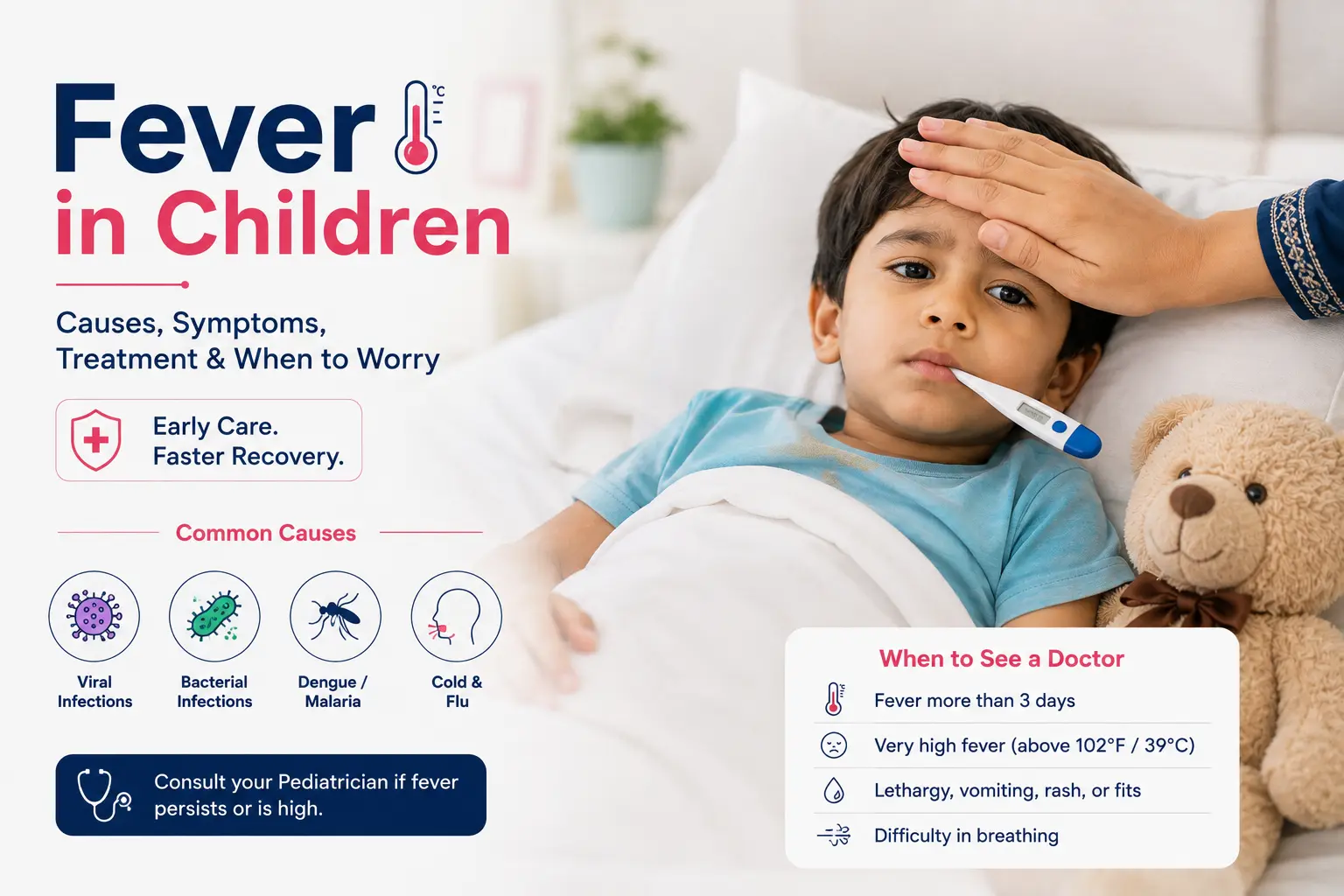
Few things unsettle a parent more than a hot forehead at midnight. The good news: most childhood fevers are the body doing exactly what it should. Here's how to tell an ordinary fever from one that needs a doctor.
What actually counts as a fever?
A fever is generally a body temperature of 100.4°F (38°C) or higher. Anything below that is usually just normal variation — a child's temperature naturally rises after running around, after a warm bath, or late in the evening.
Fever itself is not an illness. It is the immune system raising the body's thermostat to make life harder for viruses and bacteria. In other words, a fever is a sign your child's defences are working.
How to measure it properly
- Digital thermometer under the arm — safe and simple for babies and toddlers
- Under the tongue — reliable for children old enough to hold it still, usually 4 years and above
- Forehead or ear thermometers — quick and convenient, though slightly less precise
Note the reading and the time. A written record of how the temperature moves through the day is genuinely useful when you see the doctor.
How high is too high?
Parents often assume a higher number means a more serious illness. It usually doesn't. A child with a 102°F fever who is drinking, playing a little and responding normally is often less concerning than a child with 100.6°F who is limp and refusing all fluids.
Watch the child, not just the thermometer. Alertness, breathing, drinking and activity tell you far more than the number alone.
See a doctor promptly if your child
- Is under 3 months old and has any fever at all — this always needs same-day medical attention
- Has difficulty breathing, rapid breathing, or is pulling in at the ribs
- Is unusually drowsy, difficult to wake, or unresponsive
- Has a stiff neck, a severe headache, or discomfort in bright light
- Has a rash that does not fade when you press a glass against it
- Is vomiting repeatedly or shows signs of dehydration — very few wet nappies, no tears, dry mouth
- Has a fever lasting more than 3 days, or one that settles and then returns
- Has a seizure or convulsion
- Simply seems very unwell to you — parental instinct matters
Caring for a feverish child at home
For a child who is otherwise alert and drinking, comfort is the goal — not chasing the temperature down to a particular number.
- Offer fluids often. Small, frequent sips of water, milk, coconut water, buttermilk or ORS. Keep breastfeeding on demand for babies.
- Dress them lightly. One thin layer. Heavy blankets trap heat and make children more uncomfortable.
- Keep the room comfortable. A fan or moderate air conditioning is fine — a comfortable child rests better.
- Let them rest. Sleep and quiet play are exactly what the body needs.
- Don't force food. Appetite dips during fever and returns as the child recovers. Fluids matter far more than meals.
About fever medicines
Paracetamol is commonly used to keep a child comfortable, but the correct dose depends on your child's weight, not their age. Ask your pediatrician for the right dose and interval for your child, and write it down. Never give aspirin to a child, and never use leftover medication prescribed for someone else.
Things that don't help — and can harm
- Cold or ice water sponging — causes shivering, which actually raises core temperature
- Rubbing alcohol on the skin — can be absorbed and is dangerous for children
- Bundling in blankets to "sweat it out" — traps heat
- Antibiotics for every fever — most childhood fevers are viral, and antibiotics do nothing against viruses while contributing to resistance
What about febrile seizures?
Some children between roughly 6 months and 5 years may have a brief seizure when their temperature rises quickly. It is frightening to witness, but febrile seizures are usually short and do not cause lasting harm.
If it happens: lay your child on their side on a safe flat surface, don't put anything in their mouth, note how long it lasts — and seek medical care. Any first seizure needs to be assessed by a doctor.
When fever is common in Hyderabad
Fevers cluster around seasonal changes. During and after the monsoon, viral fevers, dengue and typhoid become more frequent across Hyderabad. A fever with body aches, a rash, or fever that persists beyond three days deserves an early check rather than a wait-and-watch approach.
Keeping vaccinations on schedule also prevents several serious causes of fever. You can read more about our child vaccination service and the recommended immunization schedule.
What temperature is considered a fever in children?
A temperature of 100.4°F (38°C) or higher is generally considered a fever. Readings below this are usually normal variation, especially after activity or a warm bath.
Should I wake my sleeping child to give fever medicine?
Usually not. Restful sleep helps recovery. If your child is sleeping comfortably, let them rest and check on them periodically. Wake them if you are concerned about how they are breathing or responding.
How long does a viral fever last in children?
Most viral fevers settle within 3 days. A fever lasting longer than 3 days, or one that settles and then returns, should be assessed by a pediatrician.
Can teething cause a high fever?
Teething may cause a very slight rise in temperature but does not cause a true fever. If your teething baby has a fever of 100.4°F or above, look for another cause and consult your doctor.
When should a baby with fever see a doctor immediately?
Any fever in a baby under 3 months needs same-day medical attention. Also seek immediate care for breathing difficulty, unusual drowsiness, a rash that doesn't fade under pressure, repeated vomiting, seizures, or if your child simply seems very unwell.
Worried about your child? We're here to help.
Book a consultation with Dr. K Vikram (MBBS, MD) at Kranthi Children's Clinic, Pragathi Nagar, Hyderabad.
Book on WhatsAppMedical disclaimer: This article is for general information and parent education only. It is not medical advice and does not replace an in-person consultation. If you are worried about your child's health, please contact your pediatrician or call us on +91-9000339933.